

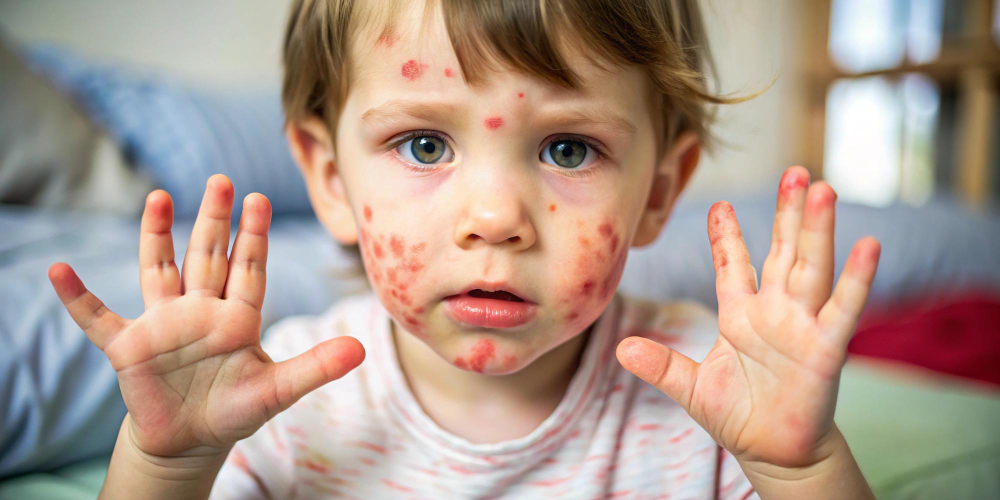
What is Hand Foot Mouth Disease in Children?
Hand Foot Mouth Disease in Children is a common illness caused by viruses. Usually, it affects young children under age five. However, older children can get it too. This illness often spreads in childcare centers and schools. According to the Centers for Disease Control and Prevention (CDC), it is not usually serious. Yet, it can make children feel uncomfortable for several days. Because it spreads easily, knowing the basics helps parents protect their kids.
Common Symptoms of Hand Foot Mouth Disease
At first, children may seem tired or have a mild fever. Soon after, other symptoms of hand foot mouth disease in children appear. For example, you may notice:
Sometimes, the mouth sores make eating or drinking painful. Because of this, children may drool more than usual. Not every child will have all symptoms. Still, if you see these signs, it is important to watch your child closely.
Causes and How the Disease Spreads
Hand Foot Mouth Disease is most often caused by the coxsackievirus. However, other similar viruses can also lead to this illness. The disease spreads easily from person to person. For instance, it can pass through:
Because the virus can live on surfaces, cleaning toys and hands often helps. Children are most contagious during the first week. Yet, they can still spread the virus for days after symptoms fade.
How Hand Foot Mouth Disease is Diagnosed
Doctors usually diagnose hand foot mouth disease by looking at the symptoms. For example, the unique rash and mouth sores help tell it apart from other illnesses. Sometimes, a doctor may ask about recent contact with sick children. Rarely, a lab test may be needed to confirm the virus. However, most cases do not require special tests. If you are unsure, it is always best to check with your child’s healthcare provider.
Treatment Options for Children
There is no specific cure for hand foot mouth disease. Instead, treatment for hand foot mouth disease focuses on easing symptoms. Most children get better on their own within 7 to 10 days. To help your child feel better, doctors may suggest:
Because mouth sores can hurt, avoid giving spicy or acidic foods. If your child cannot drink or seems very weak, contact your doctor right away. The World Health Organization (WHO) also recommends rest and careful monitoring.
Home Care and Comfort Measures
At home, you can do several things to help your child recover. For instance, try these comfort measures:
Because fever and sore throat can make children fussy, patience is key. If your child has trouble breathing, cannot swallow, or shows signs of dehydration, seek medical help quickly.
Prevention Tips for Parents and Caregivers
Preventing hand foot mouth disease in kids can be challenging, but simple steps help. For example, you can:
Because the virus spreads easily, good hygiene is the best defense. The CDC and other health groups stress the importance of handwashing and keeping sick children apart from others. By following these tips, parents and caregivers can lower the risk of outbreaks.