

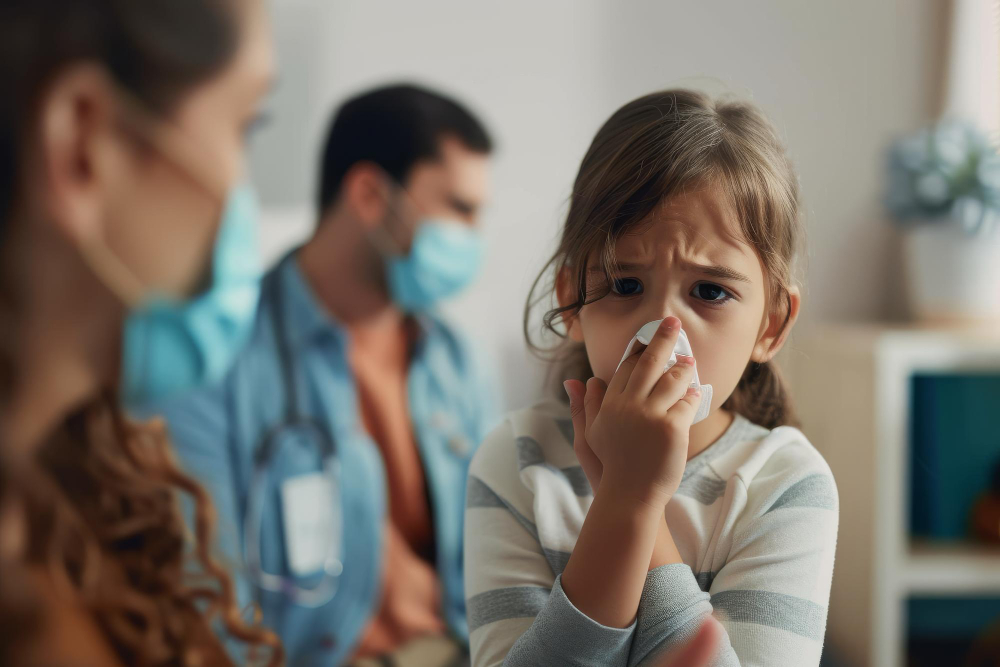
What Is Wheezing in Children?
Wheezing in children is a high-pitched whistling sound when your child breathes. Often, you may hear it most when your child exhales. Sometimes, it can happen when they inhale too. Because the airways are narrow or blocked, air moves through with difficulty. As a result, you hear this sound. Wheezing can happen at any age, but it is common in young children. According to the Centers for Disease Control and Prevention (CDC), many children experience wheezing at least once.
Common Causes of Wheezing in Children
There are several reasons for child wheezing causes. While some are mild, others need quick care. For example, a cold or flu can cause swelling in the airways. In addition, allergies may trigger wheezing in kids. Below are some common causes:
Because causes can vary, it is important to watch for other symptoms too.
Recognizing Symptoms of Wheezing
Wheezing is often just one sign of a breathing problem. However, other symptoms can appear as well. Knowing these helps you spot trouble early. For example, you might notice:
Because children may not always describe how they feel, watch for these signs closely.
How Wheezing Is Diagnosed
Doctors use several steps to find the cause of wheezing in children. First, they listen to your child’s chest with a stethoscope. Next, they may ask about recent illnesses or allergies. Sometimes, a doctor will order tests. For example, they might use:
Because some causes need quick treatment, doctors act fast if your child is in distress.
Treatment Options for Wheezing in Children
Treatment depends on the cause of wheezing. For mild cases, rest and fluids may help. However, some children need medicine. For example, doctors may prescribe:
Because each child is different, always follow your doctor’s advice. The World Health Organization (WHO) recommends seeking care if symptoms worsen.
When to Consult a Doctor
Sometimes, wheezing in children is mild and goes away. However, you should call a doctor if:
Because some cases can become serious, it is better to be safe. The CDC suggests quick care for severe symptoms.
Prevention and Home Care Tips
While you cannot prevent all cases, you can lower the risk of wheezing in children. For example, you can:
Because early care helps, watch for new symptoms and talk to your doctor if you have concerns.